
PNG parliament to finally address Bougainville decision

This article details the Papua New Guinea (PNG) National Parliament formalising the parliamentary process to address the Bougainville independence referendum result, setting up a momentous and controversial decision.
Key Summary Points
The Core Issue: The PNG Parliament is preparing to formally debate and vote on whether to ratify the result of the 2019 referendum, in which 97.7% of Bougainvilleans voted in favour of political independence.
High Voting Threshold Set: Parliament adopted a formal sessional order that sets an unusually steep voting bar: granting Bougainville sovereignty will require a three-quarters absolute majority (89 out of 118 MPs), rather than the standard two-thirds majority typically required for constitutional amendments.
Political Backlash:
Bougainville leaders—including Autonomous Bougainville Government (ABG) Vice-President Ezekiel Massat—scathingly criticized the 89-vote threshold, accusing PNG of adopting a strategy to "poison the waters" and make independence practically impossible to achieve.
Opposition MPs and Bougainville parliamentary leaders questioned the legal origin of the 75% rule, arguing that joint consultations had not finalized this requirement.
PNG Government's Stance:
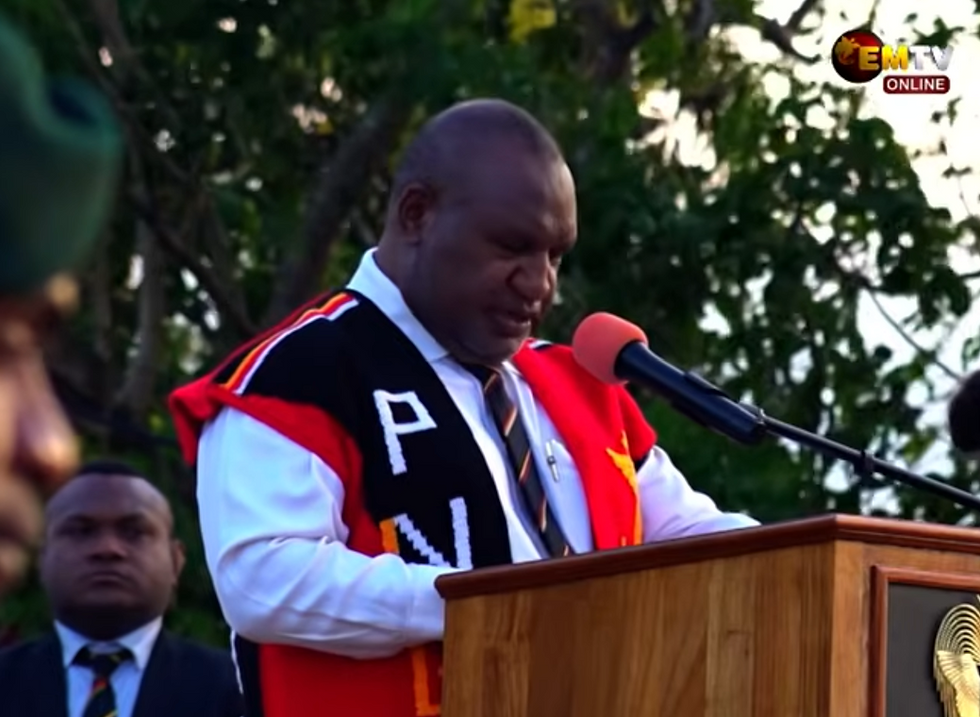
Prime Minister James Marape framed the moment as "one of the most sensitive and consequential issues" in the nation's history, emphasizing that Parliament has a constitutional obligation (under Section 342) to make the final call.
The national government defended the three-quarters rule by citing constitutional provisions regarding changes to national borders and sovereignty, maintaining that decisions of this scale require overwhelming nationwide consensus.
Significance & Historical Context:
The 2019 referendum was part of the 2001 Bougainville Peace Agreement, which ended a decade-long civil war that claimed over 15,000 lives.
Prime Minister Marape noted that while the final vote carries massive weight for PNG's national unity, the 97.7% referendum outcome will remain permanently on the historical record regardless of the parliamentary vote.

Let’s face one clear fact --- Bougainville is being treated as a possession today.
How did this happen and who possesses Bougainville? The Bougainvillean people have a claim for possession because they live there and have done so for a very long time. However, at the political level, the land of the Bougainvilleans is possessed by groups of people from outside of Bougainville.
How it got this way, of course, is down to the European colonial powers who arrived and drew up a bunch of maps that we still take for granted. Look at the map of the big island of New Guinea and note the line running roughly down the centre of the island. Did the people who live…
I’m sorry but I cannot contain my outrage. 97.7%. Yes, 97.7% of Bougainvilleans have voted for independence from Papua New Guinea yet the Papua New Guinea government decides to change the voting rules in parliament to seemingly favour a vote against independence. Think about it. 97.7% rounds out pretty well to 100% of the population, as near to unanimous as anyone could ever expect in the modern world. 97.7% rounds out closer to 100% than it does to 90%. Imagine if we had a vote for or against an issue in Australia that came out at 90%. It would be almost beyond belief.
How many of those 97.7% of Bougainvilleans will be voting in parliament on the independence issue? Hm?!…