
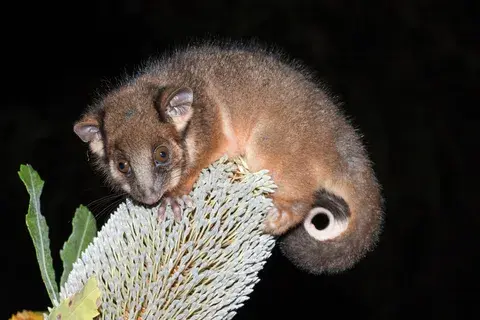
Two Marsupials Re-emerge in New Guinea Rainforests After 6,000 Years

Two marsupial species previously known only from 6,000-year-old fossil records have been documented alive in the remote rainforests of West Papua, New Guinea. Researchers, including renowned biologist Tim Flannery, identified these "Lazarus species"—taxa that reappear after a long absence from the fossil record—through a combination of new photographs, museum specimen re-examination, and recent field observations.
The two species identified are:
The Pygmy Long-Fingered Possum (Dactylonax kambuayai): A tiny striped possum characterized by an elongated fourth finger used to extract insect larvae from trees. While fossils suggested it lived in Queensland, Australia, around 300,000 years ago, it was thought to have vanished from its last known refuge in West Papua about 6,000 years ago.
The Ayamaru Ringtail Possum (Petauroides ayamaruensis): Previously known only from subfossil remains found in caves on the Vogelkop Peninsula, this species has now been confirmed to still inhabit the region's low-to-mid-elevation rainforests.
The discovery was aided by the identification of "misidentified" specimens in museum collections and recent sightings that matched the fossil descriptions. Scientists noted that the survival of these animals highlights New Guinea’s role as a critical evolutionary refuge and suggests that other species currently considered extinct may still exist in the island's unexplored territories.


Comments